
Our top picks for winter tires that handle Ontario's toughest conditions.

If you've ever bought or sold a used car in Ontario, you've dealt with the Safety Standards Certificate. If you haven't yet, you will. It's one of those things that seems straightforward until you're actually going through the process and discover your "perfectly fine" car needs $1,800 in work to pass. Ask me how I know.
Here's what the inspection actually involves, what it costs, what commonly fails, and how to avoid surprises.
A Safety Standards Certificate (SSC) is a document that confirms a vehicle meets Ontario's minimum safety requirements at the time of inspection. It's issued by a licensed Motor Vehicle Inspection Station — you'll see the orange and black sign outside qualifying shops.
You need an SSC to transfer a used vehicle's registration to a new owner in Ontario. Whether you're buying from a private seller or a dealer, the vehicle must have a valid SSC before you can register it in your name. Dealers are required to provide one. In a private sale, either the buyer or seller can arrange and pay for it, though this is often a point of negotiation.
The certificate is valid for 36 days from the date of inspection. If the transfer isn't completed within that window, you'll need a new one. This occasionally catches people off guard, especially if financing or insurance paperwork gets delayed.
The inspection covers all the critical safety systems on the vehicle. It's not a comprehensive mechanical assessment — an inspector won't tell you the engine is about to blow — but it does verify that the car is safe to drive on public roads. Here's what they look at:
Brakes: Pad and rotor thickness, brake line condition, parking brake function, ABS system (warning light check). This is the most common failure area. Minimum pad thickness is 1.5mm for disc brakes. If you're anywhere close to that limit, it's a fail.
Tires: Minimum tread depth of 1.5mm across the full width of the tire. No cuts, bulges, or exposed cords. All four tires must be the same size and type. Mismatched tires are a fail, which trips up a lot of people.
Steering and suspension: No excessive play in the steering, working power steering (if equipped), ball joints, tie rod ends, wheel bearings, struts and shocks. Ontario roads beat up suspension components, and this is the second most common failure category.
Lights: All exterior lights must work — headlights (high and low beam), tail lights, brake lights, turn signals, reverse lights, and licence plate light. Headlight aim is checked. Cracked or moisture-filled lenses can be a fail.
Body and frame: The inspector checks for structural rust and damage. This means frame rails, subframe, control arm mounting points, and body mounting points. Surface rust on body panels is fine, but rust that has compromised structural integrity is an automatic fail.
Exhaust: No leaks, everything properly secured, catalytic converter present. If your exhaust has been rusting for a few Ontario winters, this is a common failure point.
Glass and wipers: Windshield can't have cracks in the driver's primary viewing area. Wipers must work and be in serviceable condition.
Other items: Seatbelts, horn, mirrors, fuel system, speedometer, defroster, doors and latches. The full list is longer than most people expect.
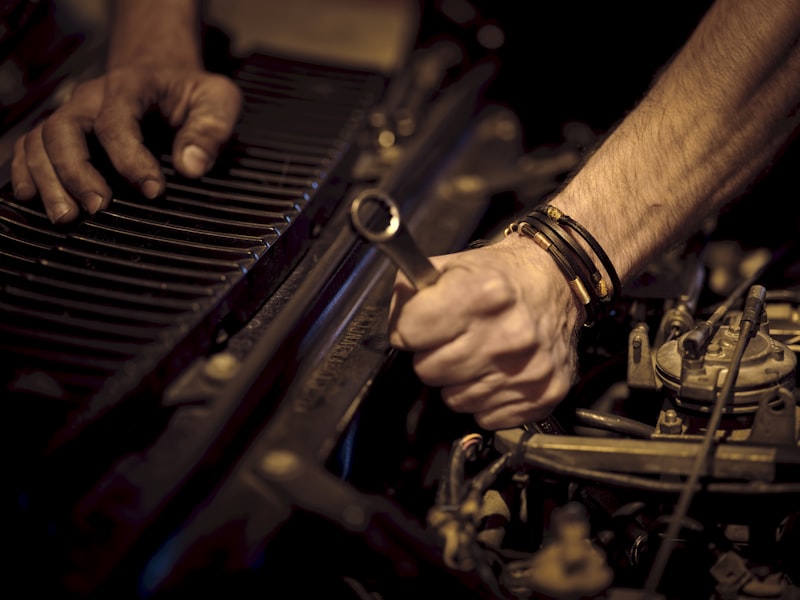
Having watched dozens of cars go through inspections — my own and those of people I've helped buy — here are the items that fail most often in Ontario:
Brake pads and rotors: By far the most common. Pads wear down to minimum spec without the driver noticing because they're gradual. Rotors develop scoring and minimum thickness issues. Budget $400 to $800 per axle if brakes need doing.
Suspension components: Worn ball joints, torn tie rod boots, leaking struts, worn sway bar links. Ontario's pothole-riddled roads accelerate this wear dramatically. A ball joint replacement runs $200 to $400 per side. Struts are $600 to $1,000 per pair including alignment.
Rust: Subframe and underbody rust is the silent killer. A car can look fine from the outside and have serious structural corrosion underneath. This is particularly common on older Hondas, Mazdas, and some Chrysler products. If rust is structural, the repair cost often exceeds the vehicle's value.
Exhaust system: Pipes, mufflers, and flex joints rot from Ontario salt. A muffler shop can often fix exhaust issues for $200 to $500, making it one of the more affordable failure items.
Lights: Burnt bulbs, corroded sockets, cracked lenses. Usually cheap to fix but easy to overlook.
The inspection itself typically costs $80 to $120, though some shops charge more. This is just the inspection fee — any repairs needed to pass are additional. There's no fixed price set by the province, so shop around. Just make sure the station is licensed — look for the official Motor Vehicle Inspection Station sign.
Some shops will do a "pre-inspection" for a reduced fee to identify issues before the formal inspection. This can be useful if you suspect the car might have problems, as it gives you the chance to address issues and shop for better repair prices rather than feeling pressured to fix everything at the inspection shop.
If you're selling a car, get the inspection done before listing it. A car with a fresh SSC is worth more and easier to sell. If issues come up, you can decide whether to fix them and include the cost in your asking price, or sell the car as-is (without the SSC) at a lower price.
If you're buying a car, don't accept a seller's claim that "it'll pass no problem." Get the SSC done at a shop you trust, not one the seller recommends. I've heard too many stories of friendly inspectors at the seller's favourite shop overlooking issues. Your safety depends on this document being accurate.
Our used car buying checklist covers the things you can check yourself before ever getting to the inspection stage. Understanding whether you're buying privately or from a dealer also affects how the inspection process works. And if the inspection reveals brake issues, our guide on signs your brakes need attention explains what different symptoms mean.
For the complete official list of inspection requirements and to find a licensed inspection station near you, visit the Ontario.ca vehicle safety inspection page. You can also verify that a specific shop is licensed to perform inspections through the Ontario Motor Vehicle Industry Council (OMVIC).
Our top picks for winter tires that handle Ontario's toughest conditions.

Explore the best coastal routes around Georgian Bay.
What to check before buying a used vehicle in Ontario.