
Our top picks for winter tires that handle Ontario's toughest conditions.
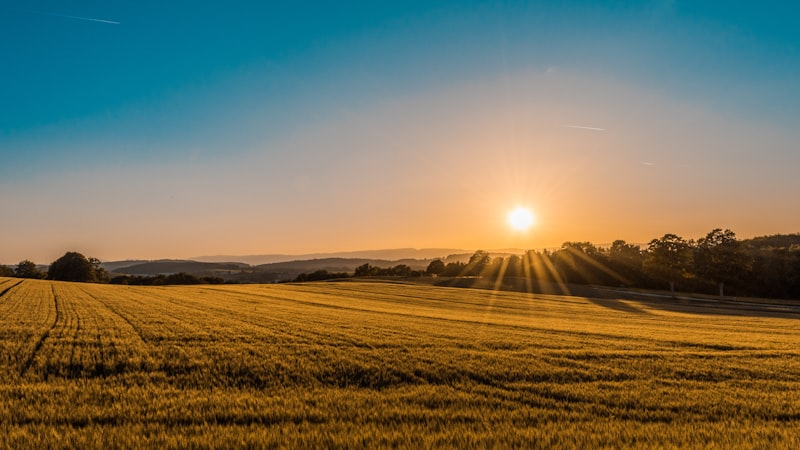
Last October I was driving County Road 41 north of Dacre when a full-grown bull moose stepped out of the tree line about 80 metres ahead of me. Just walked onto the road like he owned it, which, fair enough, he kind of does. I stopped, waited, and after what felt like five minutes of him staring at my hood ornament, he wandered off into the brush on the other side. No drama, no collision, no insurance claim. But only because I was driving at a speed that gave me time to stop.
Rural Ontario driving is a different game than highway commuting. The roads are quieter, the scenery is better, and the hazards are completely different from what you deal with on the 401. After years of driving back roads across this province, from the Ottawa Valley to the Bruce Peninsula to the deep north, here's what I've learned about staying safe and actually enjoying the drive.
This is the big one, and I'm putting it first because it's the one that can kill you. Ontario has an estimated 80,000 to 100,000 moose and over 500,000 white-tailed deer. They don't check for traffic before crossing the road.
Moose are particularly dangerous because of their body shape. A collision at speed typically takes out the legs and sends 500+ kilograms of animal through your windshield at hood height. This is not survivable at highway speeds in most vehicles. Deer are smaller but far more numerous, especially in southern and central Ontario.
Practical steps that actually matter: reduce your speed at dawn and dusk, which is peak movement time for both species. Scan the road edges, not just the road surface. Moose and deer often stand in the ditch before crossing. If you see one deer cross, expect more. They travel in groups. If a moose is on the road, do not try to go around it. Stop and wait. They're unpredictable and can change direction fast.
Those yellow diamond wildlife signs aren't decoration. They're placed in documented high-crossing areas based on actual collision data. When you see one, take it seriously and slow down.
Ontario has tens of thousands of kilometres of gravel roads, and if you're heading to a cottage, campsite, or pretty much anywhere north of Barrie that isn't on a highway, you'll eventually end up on one. Gravel drives differently than pavement, and your car doesn't handle the same way.
The biggest mistake I see is people driving gravel at pavement speeds. Your stopping distance on loose gravel is significantly longer than on asphalt. Your tires have less grip, especially on turns. And washboard sections, those regular ridges that develop on gravel roads, will rattle your fillings loose and beat up your suspension if you're going too fast.
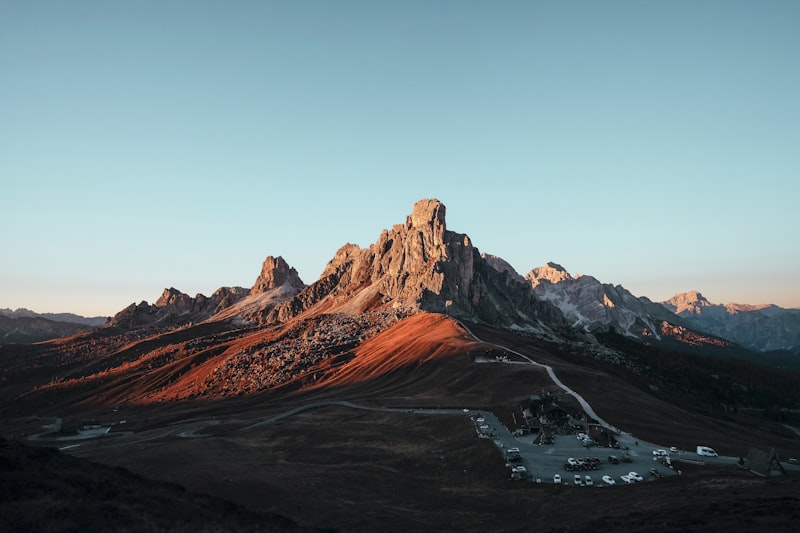
Keep your speed to 60-70 km/h on well-maintained gravel, slower on rough sections. Increase your following distance dramatically because the dust cloud from the vehicle ahead can blind you completely. If a car is approaching from the other direction, both of you should slow down and move right. Flying gravel chips from a passing car are the number one cause of windshield cracks on rural roads.
After driving gravel, check your wheel wells and undercarriage. Rocks get lodged in brake components and around the exhaust. Understanding how conditions affect your vehicle helps you anticipate wear from these surfaces.
Large sections of rural Ontario have zero cell coverage. Not weak signal, zero. This catches people off guard, especially if they're relying on their phone for navigation. I learned this the hard way trying to find a cottage near Harcourt using Google Maps and having the signal die completely 30 kilometres from my destination.
Before heading into rural areas, download offline maps for the entire region you're driving through. Tell someone your route and expected arrival time. Carry a physical map as a backup, you can pick up Ontario road maps at most ServiceOntario locations or CAA offices. And make sure your vehicle is in solid mechanical shape before heading somewhere that a tow truck might take three hours to reach.
If you break down in a no-service area, stay with your vehicle. It's easier for someone to spot a car on the road than a person walking through the bush.
Between May and November, rural Ontario roads are shared with tractors, combines, sprayers, and other farm equipment that moves at 30-40 km/h and takes up most of the road. This is just reality in agricultural areas, and it requires patience.
Don't pass farm equipment unless you have a clear, long sightline and the road markings allow it. These machines are often wider than your lane, and some have implements that extend beyond what you initially see. Combines in particular can have headers that span the full road width. If you can see a tractor ahead, slow down well before you reach it. Farmers are generally aware of traffic behind them and will pull over when there's a safe spot, but the operative word is "safe." Give them that opportunity instead of making a risky pass.
Watch for mud on the road near farm entrances, especially after rain. Farm tires track heavy clay onto the asphalt, and it's as slippery as ice when wet.
Rural Ontario still has a surprising number of single-lane bridges, especially on township roads and in cottage country. These are usually marked with signs indicating who has the right-of-way, but the etiquette is simple: if someone is already on the bridge or closer to it, they go first. Flash your lights to signal the other driver if it's ambiguous.
Many rural roads are also narrower than you'd expect, sometimes barely two lanes wide with no shoulders. When meeting oncoming traffic, especially larger vehicles, you may both need to slow down and move right. Don't assume there's room to pass at speed.
Rural night driving is a completely different experience than city or highway night driving. There are no streetlights. The darkness is absolute. Your headlights are all you have, and they illuminate a surprisingly small portion of the road ahead at speed.
Use your high beams whenever there's no oncoming traffic, and actually pay attention to switching them off when another car approaches. The number of people who blind oncoming drivers on dark rural roads is frustrating and dangerous. If you're being blinded by an oncoming car's high beams, look at the right edge of the road rather than directly at the lights.
Animals are much harder to see at night, and their eyes don't always reflect your headlights, especially moose. Reduce your speed to a level where you can stop within the distance your headlights illuminate. On a two-lane rural road at night, that means 80 km/h is probably your responsible maximum, regardless of what the speed limit sign says.
None of this is meant to scare you away from rural driving. It's some of the best driving in the province. But being prepared for the realities of back-road Ontario means you can actually relax and enjoy it.
Keep your tank above half in rural areas. Carry water, a basic first aid kit, and a flashlight. If you're heading to a remote area, a pre-trip vehicle check is not optional. And let someone know where you're going, especially in areas without cell service.
The Ontario Ministry of Transportation has additional resources on rural road safety, including wildlife collision reporting and road condition updates for provincial highways.
For more back-road route ideas, check out our guide to small-town Ontario road trips that take you through some of the most scenic rural areas in the province.
Our top picks for winter tires that handle Ontario's toughest conditions.

Explore the best coastal routes around Georgian Bay.
What to check before buying a used vehicle in Ontario.