
Our top picks for winter tires that handle Ontario's toughest conditions.
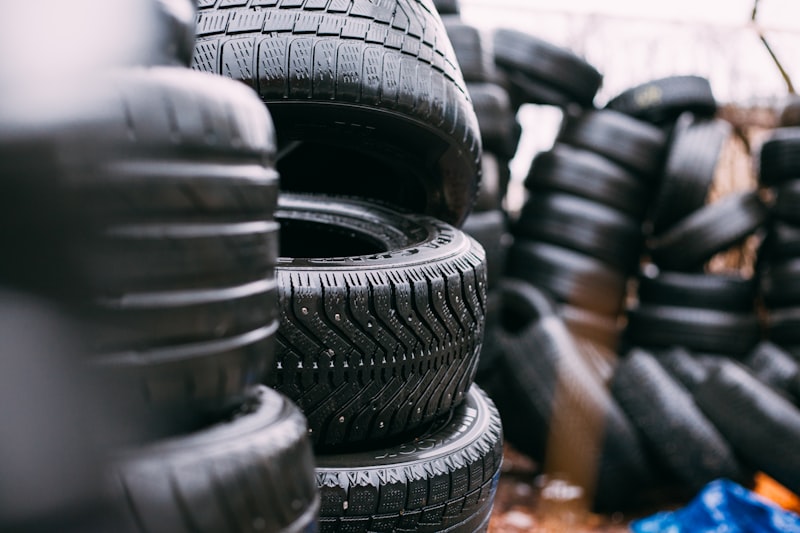
Walk into any tire shop in Ontario and you'll hear these three terms tossed around constantly: all-season, all-weather, and winter. They sound like points on a spectrum, but the differences between them are bigger than most people realize. I spent years assuming all-season meant "fine for everything" until a January morning on Highway 11 near Orillia taught me otherwise — sideways at 60 km/h with zero grip and a transport truck in my mirrors.
Let me break down what each type actually is, what it can and can't do, and which makes sense for your situation here in Ontario.
Here's the uncomfortable truth about all-season tires: the name is marketing, not engineering. A more honest label would be "three-season tires." They're designed to handle dry pavement, wet roads, and light fall conditions reasonably well. But once temperatures consistently drop below 7°C — which in most of Ontario happens somewhere around late October to mid-November — the rubber compound in all-season tires starts to harden.
Hard rubber doesn't grip. It's that simple. Even on dry pavement at -10°C, an all-season tire has noticeably less traction than a winter tire. On actual ice or packed snow, the difference is dramatic. Testing by Transport Canada and various tire manufacturers consistently shows that winter tires reduce braking distances on snow and ice by 25 to 30 percent compared to all-seasons.
All-season tires carry the M+S (Mud and Snow) designation, but that's a self-certified label that only indicates the tread pattern has some capacity for those conditions. It doesn't mean the tire has been tested and proven in winter conditions. You'll recognize all-seasons by their moderate tread depth and relatively subtle tread patterns.
Winter tires are engineered from the compound up for cold conditions. The rubber stays soft and pliable well below -30°C. The tread patterns feature deep sipes — those thin slits cut into the tread blocks — that create thousands of extra biting edges to grip ice and packed snow. The channels are designed to evacuate slush and wet snow aggressively.
The key identifier is the mountain snowflake symbol (technically called the Three-Peak Mountain Snowflake or 3PMSF). This isn't a marketing badge — it means the tire has met specific performance standards in standardized snow traction testing. Any tire with this symbol has been proven to provide a minimum level of traction on packed snow.
The trade-off is that winter tires wear faster on warm, dry pavement. The soft compound that grips ice so well gets chewed up by hot August asphalt. Running winters year-round will burn through them in a season or two and they'll feel vague and squishy in summer heat. That's why the seasonal swap matters.
All-weather tires are the newest category, and they fill a real gap. These tires carry the mountain snowflake symbol — meaning they've passed winter traction testing — but they're designed to be left on year-round. The compound is a genuine compromise between summer firmness and winter softness.
Brands like Nokian (who essentially created this category with the WR series), Toyo, and Michelin have made serious advances here. A good all-weather tire will outperform an all-season in winter conditions by a meaningful margin. On the coldest mornings, they won't match a dedicated winter tire, but they're far closer than an all-season would be.
The appeal is obvious: one set of tires, no seasonal swaps, no second set of rims taking up space in the garage. For a lot of Ontario drivers, especially those in the GTA who mostly drive cleared city roads and don't often face serious snow, all-weather tires are a genuinely viable option.
This depends on how and where you drive in Ontario, and I'll be honest about the trade-offs.
Go with dedicated winter tires if: you commute on highways, regularly drive outside the GTA, live north of Highway 7, or simply want the maximum margin of safety. The difference in emergency braking on ice is not subtle. If you have the storage space and the budget for a second set of wheels, this is the gold standard.
All-weather tires make sense if: you mostly drive in urban areas with regularly plowed roads, you don't have space to store a second set, or you genuinely cannot afford the upfront cost of two sets of tires and rims. They're a real step up from all-seasons in winter, even if they can't match a dedicated winter tire on the worst days.
All-seasons alone are risky if: you're driving between November and March in Ontario. Full stop. Even in downtown Toronto, we get enough ice, freezing rain, and surprise snow events that all-season tires leave you exposed. I've seen too many fender-benders in the first snowfall of the year involving perfectly competent drivers on inadequate tires.
Here's something a lot of Ontario drivers don't know: most Ontario auto insurance providers offer a discount for winter tires, typically around 3 to 5 percent off your premium. Both dedicated winter tires and all-weather tires with the mountain snowflake symbol qualify. Over a few years, that discount meaningfully offsets the cost of the tires. Ask your broker or check your insurer's website — you'd be surprised how many people leave this money on the table.
If you've decided on dedicated winters, timing the swap is important. Our guide on the best winter tires for Ontario covers specific models worth considering. And understanding how long your tires should actually last will help you plan the investment.
Whatever you choose, remember that tires are the only part of your car that actually touches the road. Everything else — your ABS, your stability control, your all-wheel drive — can only work with the grip your tires provide. In Ontario's winters, that grip isn't something to compromise on. Check our timing guide for when to make the seasonal switch so you're not caught in that first storm on the wrong rubber.
For the official testing standards behind the mountain snowflake symbol, Transport Canada's tire safety page has the details. And the CAA's winter driving resources include useful provincial information for Ontario drivers.
Our top picks for winter tires that handle Ontario's toughest conditions.

Explore the best coastal routes around Georgian Bay.

What to check before buying a used vehicle in Ontario.